
Collecting Vintage Putz Houses for Christmas Decor
Are you interested in learning about collecting vintage putz houses for your Christmas decor? Here are tips on identifying vintage houses.
We will cover the history of putz houses, how to identify when they were made, and share some ideas for how to incorporate them into your holiday decor.
If you are new to this blog: Welcome! My name is Anna and I share information on collecting antique/vintage items, refurbishing furniture and making small crafts/projects. The purpose of this blog is to show you how to use creativity and antiques to make your home beautiful. In addition to information on the blog, you can also follow me on the following social media accounts Instagram, Facebook or Pinterest.

Back Story
Twenty years ago, I fell in love with a vintage collection of little cardboard houses covered in glitter, mica and faux snow. These little buildings had charming windows and doors. Occasionally they had a fence around the front yard or a small tree on one side. Some buildings were a bit wonky – clearly a bit crooked after years of being used and gently knocked around. However, this only added to their appeal. This little collection of buildings seemed to embody the charm and magic of the holiday season with a nod to Christmases from long ago. Ever since seeing the first few homes, I have been on the hunt for and collecting these little houses.
These cute little buildings are among my favorite Christmas decorations and are something I love to collect. Soon, it will be the time of year to bring them out and put them on display.
Today, I am sharing my knowledge for collecting vintage putz houses so you can add them to your Christmas decor.
Collecting Vintage Putz Houses
This post includes affiliate links. If you purchase items from links provided in this post, I will receive a small commission. However there is no additional cost to you. As an Amazon Associate I earn a small commission from qualifying purchases. I am presenting you with my own opinion and honest review of the information provided. If you want to read the entire disclosure statement, please click HERE. You can also read my privacy policy by clicking HERE.
What are Putz Houses
Putz houses originated in Europe – most notably in Germany, Czech Republic, and Slovakia. The German words “Christbaum Putzen” – translated means Christmas tree decorating. Because the German word putzen means to decorate or adorn, over time it, was shortened to “putz”. Initially these little homes were part of a larger nativity scene that included animals, bottle brush trees and other structures. Unlike the cardboard putz houses we are usually familiar with, the original German putz houses were made of wood. They were usually assembled to create a village setting with faux snow and were an integral part of the Christmas season. In addition to the buildings, these Christmas villages also included churches, sheep, trees, camels, cows, horses, and of course figures of people. Historically, family members would gather together during the holiday season and set up the putz village.
There is no established “scale” for putz houses. These buildings can be all sizes. Each Christmas village and its scale is up to the collector.
On a separate note, you can also collect putz sheep, putz cows, putz horses etc.
During the 19th century, when immigrants from these countries came to the United States, they brought their Christmas traditions with them, including the putz houses and nativity scenes. Soon, the tradition of setting up a putz village and collecting putz houses became an integral part of American Christmas traditions.
How to Determine the Age of a Putz House
Pre-War Putz Houses
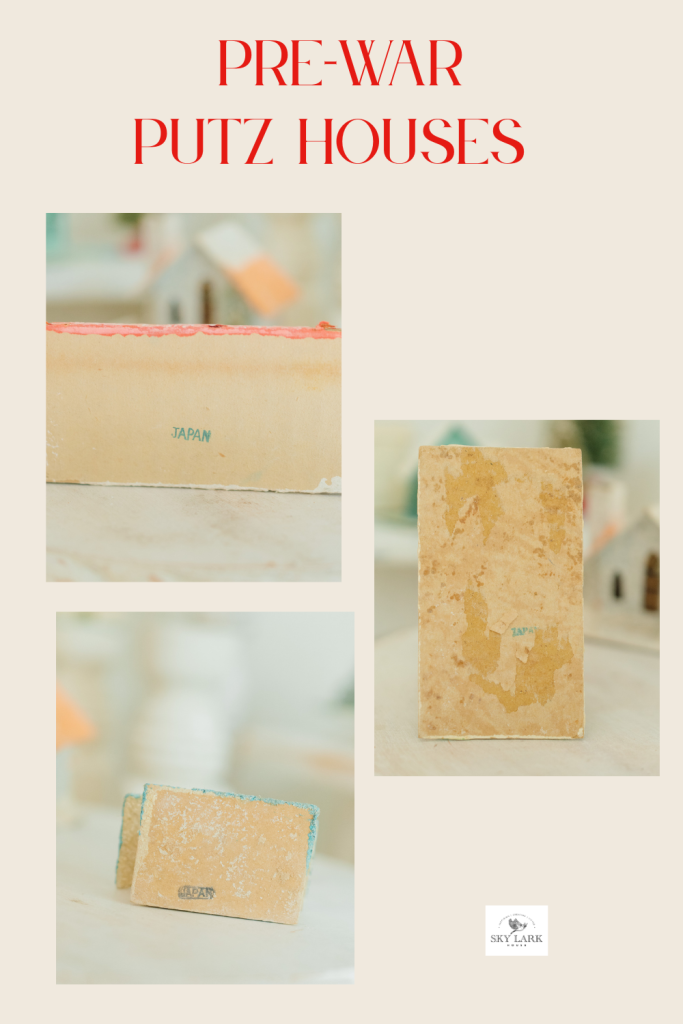
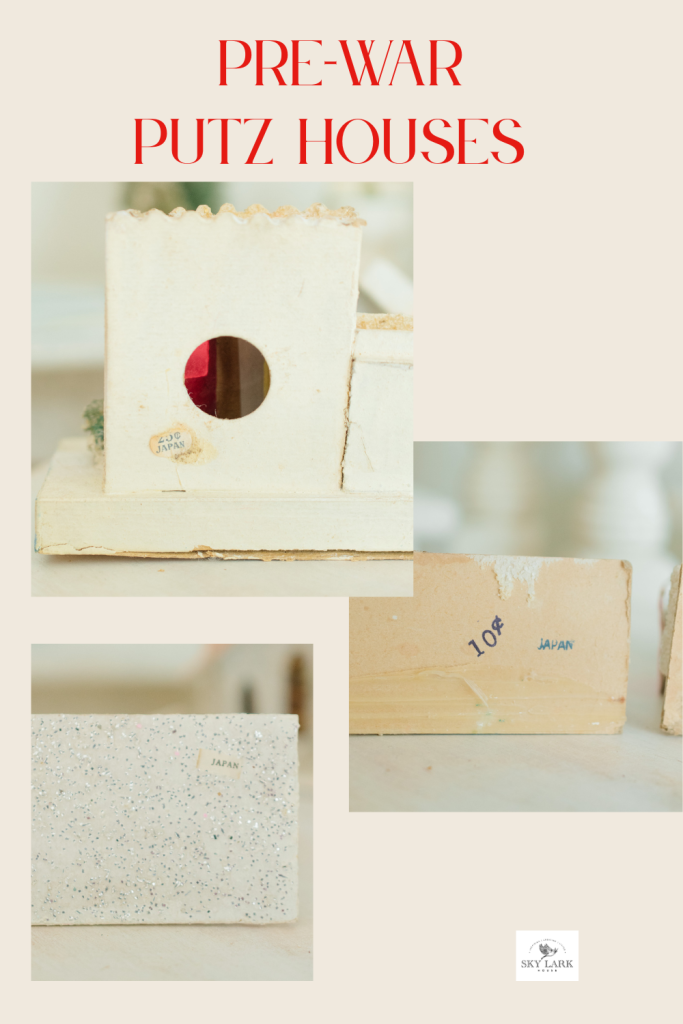
Although putz houses originated in Europe, prior to World War II (prior to 1939) many of these little putz houses were made in Japan. Around this time, “Five and Dime” stores were established and provided items the typical American family could afford. The Butler Brothers of Chicago and F.W. Woolworth are two examples of well-known companies that sold Christmas decor the average American family could afford. During this time, Japanese manufacturers created affordable goods for Americans, including these little cardboard Christmas houses. Putz houses made during this time period are stamped “Japan” or “Made in Japan” and sometimes will include a price tag ranging from 10 cents to 25 cents. These little houses were made in vibrant colors of bright pink, blues, and greens. They were made in different styles and could be connected to a light strand so that the interiors of the home was illuminated.

Post-War Putz Houses
With the occurrence of Word War II, we no longer imported putz houses from Japan. American companies, however, did start to make them domestically.
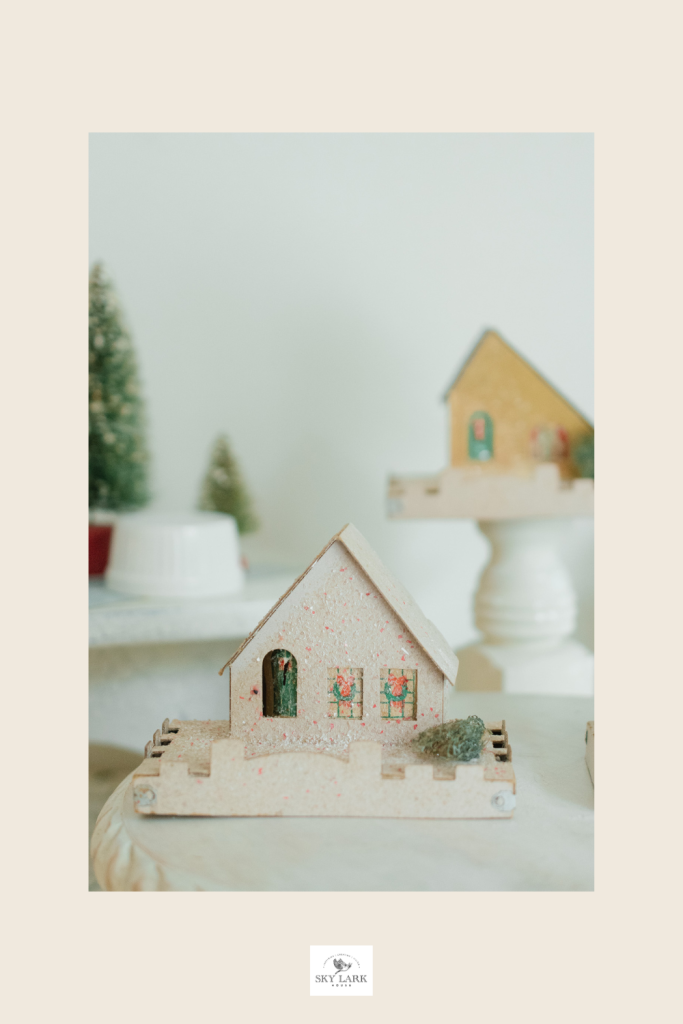
In the mid-20th century, these little houses were made in the USA but were not as sturdy as their earlier counterparts. The cardboard was thinner and they didn’t have the same level of detail as the pre-war putz houses. Sometime around the 1960s, these little houses stopped being produced.


Reproduction Putz Houses
Then in the late 1990s, manufacturers such as Ragon House and Cody Foster started to make reproduction putz houses.

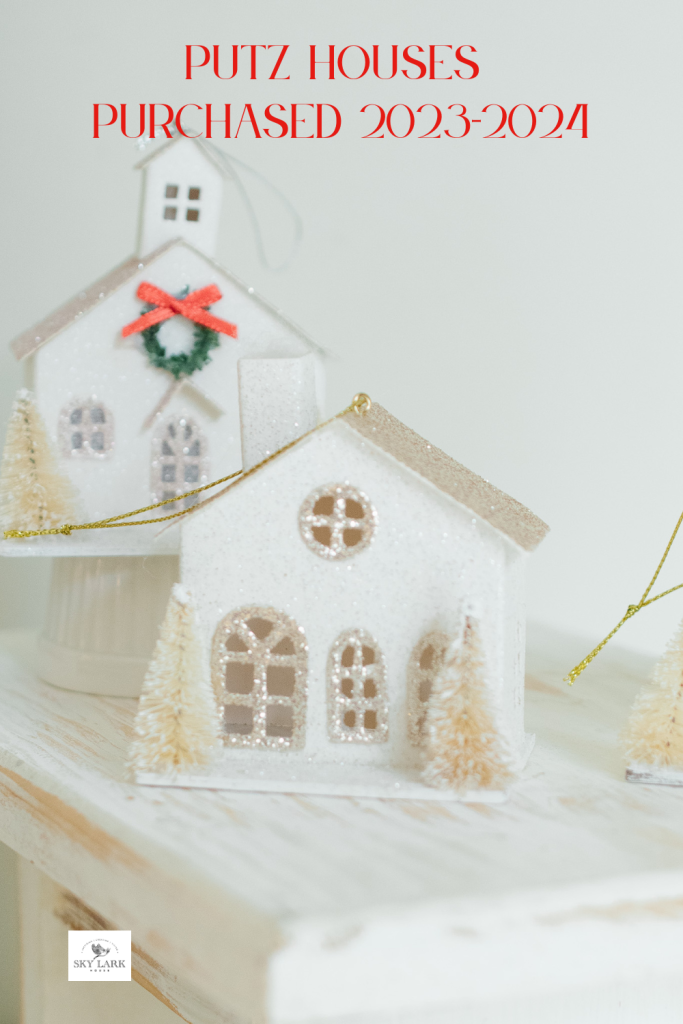
Today, putz houses are made again. Major retailers such as Hobby Lobby and Target offer these cute little houses for very reasonable prices. In recent years, I scooped up a number of small putz houses from Target for $3 a piece. These versions of putz houses will often have a “Made in China” sticker on them.
Another Way to Determine Age
In addition to those houses with a “Japan” stamp, another easy way to determine the age of a putz house is to look on the back at the size of hole for lights. Modern versions of putz houses will have a hole 1 inch in diameter while the older versions will have a much smaller opening.

Making Your Own Putz Houses
If you love crafting, good news! You can make your own putz house (or houses). Smile Mercantile is one of my favorite sources for buying and making my own reproduction vintage Christmas crafts. (A quick note, this post is NOT sponsored by Smile Mercantile and I do not have any affiliate links to the company. I genuinely like and buy their products) Using some chipboard, acrylic paint, glitter and faux snow mix – you can create almost any version of a putz house you desire. Smile Mercantile also offers putz house kits that include translucent windows and doors.
You can also find these little chipboard houses at other craft store retailers such as Michaels, or Hobby Lobby. Here are some sets I found on Amazon:
Simply apply craft paints, add a little glitter and/or snow to the buildings. When you make your own putz houses, it’s fun to customize the color scheme.
Ways to Incorporate Putz Houses into Your Christmas Decor
Most people bring out their collection of putz houses at Christmas time. As such, there are a number of ways you can incorporate these little houses into your home decor. These little buildings don’t require much space and are easy to display as well as store away.

China cupboards
Some collectors create little community scenes using Christmas putz houses in their china cupboards. Whether you have a small china cupboard mounted on a wall or a free standing step-back cupboard, these little homes are sure to add some holiday charm.
Shelves
If you have open shelving or a bookcase, you can use them to display your collection of putz houses. I have seen them displayed on open shelves in kitchens.
Christmas Tree ornaments
Some modern day and vintage putz houses are intended to be used as ornaments. The little buildings I purchased from Target are an example of putz houses that can be used as tree ornaments.
Incorporating these little structures into your Christmas tree ornaments is another way to safely display them while still admiring their charm.

Holiday Wreath
Finally, a recent trend has been to make an entire wreath using Christmas putz houses! I believe this idea was started by Anthropologie and then other creators adopted the idea.
It’s fairly easy to attach the buildings to a wreath form. However, I would recommend only making a wreath using newer putz houses. It’s unlikely you could remove the buildings from the wreath without damaging them.
Fireplace Mantel
Finally, you can also create some charming putz village scenes on a fireplace mantel. It’s a charming way to bring a sense of nostalgia into your living room during the holiday season.
Repairing Old Putz Houses
Smile Mercantile has also created a great video showing you how to repair old putz houses. Because older houses were made of cardboard and paint, they are easily damaged by heat and water. Sometimes, the glue holding a structure together has disintegrated. If you find some vintage houses in poor condition, don’t pass them up. With a little patience – a fresh coating of paint, glue, new glitter, and new snowy paint- you can restore them to their original condition. Additionally, you can purchase a replacement door and/or windows for older putz houses that have been damaged.
Here is a list of materials you may need to repair a worn-out Christmas putz house:
- clear drying glue such as Elmers
- clothes pins – to help clamp newly glued sections together
- new paint – I use matte acrylic craft paint. (try to get colors that match the existing house – you can mix paint to achieve the color needed)
- glitter in silver and gold
- clear glass glitter or Gernan glass glitter
- snow paint
- coarse white glitter
- wax paper – for recently glued houses to rest on while drying
- soft mop paintbrush – for cleaning the dirt from older putz houses
- replacement putz house windows and doors
Many houses become dirty with the passage of time. You can remove the dust and most of the dirt by using dry cornstarch powder and a small soft mop paintbrush.
Smile Mercantile also offers some good advice for the preservation of vintage cardboard putz houses. Namely, store them in acid free paper in a place cool and dry. Avoid storing these little houses in areas with high humidity and temperature fluctuations.
Other Vintage Christmas Resources
The following books offer information about collecting vintage Christmas decor.
- Kitschmasland. (I own and love this book)
- Pictoral Guide to Christmas Ornaments & Collectibles
- Christmas 1960 to the Present
- Mid-Century Christmas
Conclusion
These little light-strand-powered communities bring a sense of wonder and magic to the holiday season. I wish you the best with your vintage putz house hunting and hope you find some in the wild.

You may also enjoy:


I had no idea some of these houses were made in Japan, Anna. That is so cool! I just assumed they were all from Europe so it was fun to learn more about. Plus, I had no idea they varied so much in size either. Love the ones that look like a chateau with all the snow and glitter. They’re perfection! Can’t wait to look for them the next time we go to an outdoor event. Big hugs and thanks for always passing along your expertise, CoCo
Ooohhh, this is all so fascinating! I love that one can actually purchase replacement doors and windows for Putz houses! So lovely, that the love of Putz houses has endured for so long, that to this day one can find reproductions available in stores.
Always appreciate your decorating ideas and book lists! Thanks for all the information!